

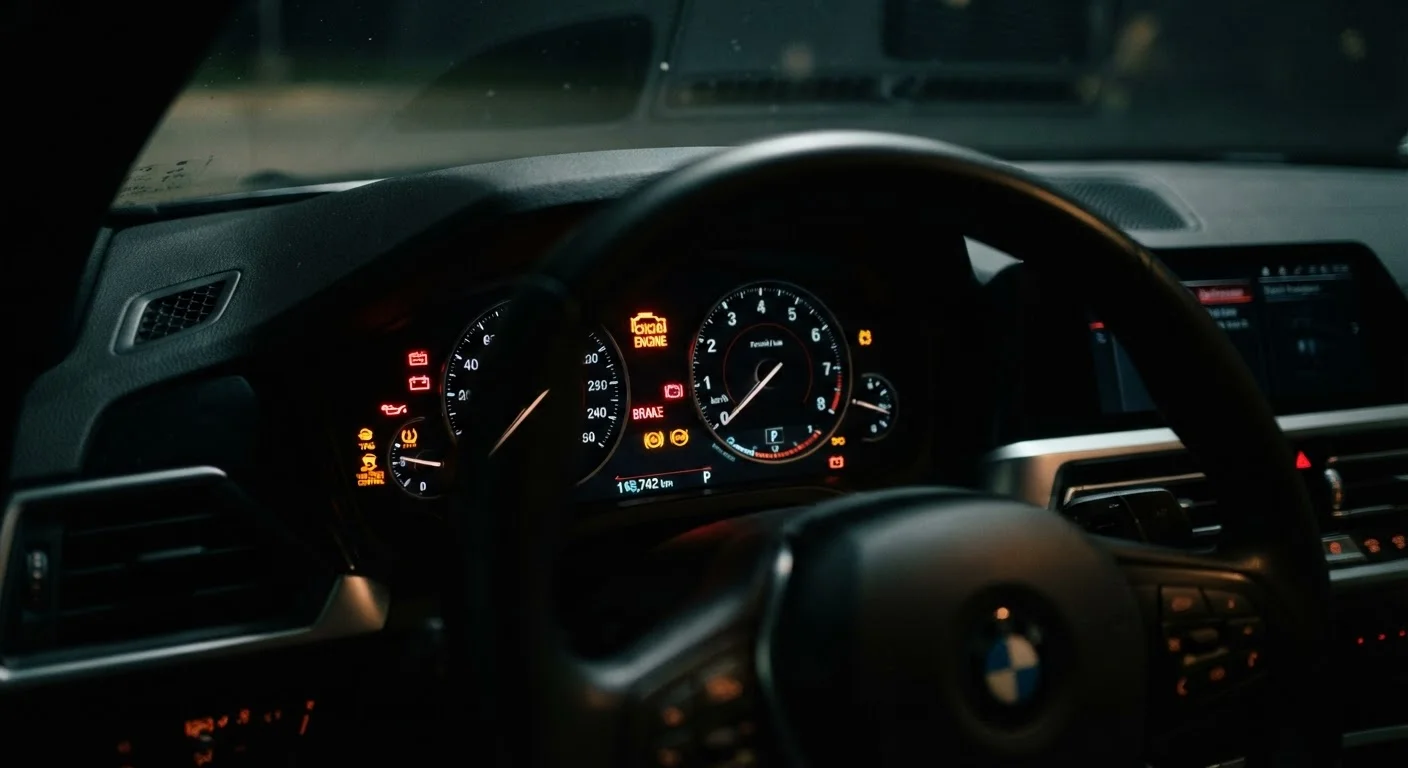
Why Warning Lights Exist - and What They're Not
Modern vehicles use an onboard diagnostic system (OBD) that continuously monitors dozens of sensors. When something falls outside normal parameters, the system triggers a dashboard warning light. Think of it as your car's way of flagging an issue before it becomes a breakdown - not a cause for immediate panic, but never something to ignore indefinitely.
Warning lights don't diagnose problems on their own. They indicate that a sensor has detected a condition worth investigating. A single light can be triggered by everything from a loose gas cap to a failing sensor. Color is your first cue: red typically signals urgent action, amber/yellow indicates something that needs attention soon, and green or blue are informational (high beams, turn signals). Your owner's manual is the authoritative source for your specific vehicle. See our guide to using your owner's manual for how to navigate it efficiently.
OBD-II
On-Board Diagnostics II - a standardized system present in most vehicles sold in the US after 1996 that monitors engine, transmission, and emissions components and stores fault codes when problems are detected.
Diagnostic Trouble Code (DTC)
A specific alphanumeric code stored by the OBD-II system when a sensor reads an out-of-range value. A mechanic or scan tool retrieves this code to pinpoint the source of a warning light.
TPMS
Tire Pressure Monitoring System - a sensor-based system that alerts the driver when one or more tires fall significantly below the recommended inflation pressure.
Catalytic Converter
An emissions-control device in the exhaust system that converts harmful combustion byproducts into less toxic gases. It can be damaged by prolonged engine misfires.
Oil Pressure
The force with which engine oil is circulated through the engine. Adequate pressure ensures all moving metal parts are lubricated; a drop in pressure can cause rapid engine damage.
Charging System
The combination of alternator, battery, and related wiring that generates and stores electrical power in a vehicle. A fault here means the battery may not recharge while driving.
The Most Common Lights - Decoded
Here's a breakdown of the lights most drivers encounter, what typically triggers them, and how urgently you should respond.
Check Engine Light (CEL)
This amber symbol - usually an engine outline - is the most misunderstood light on the dash. It can appear for minor issues (a loose gas cap, an oxygen sensor) or serious ones (a misfiring engine, a failing catalytic converter). If it's steady, schedule a diagnostic scan within a few days. If it's flashing, reduce speed immediately and have the vehicle inspected the same day - a flashing CEL often indicates active misfires that can damage the catalytic converter.
Oil Pressure Warning
A red oil can icon means your engine isn't getting adequate oil pressure. Pull over safely and shut the engine off as soon as it's safe to do so. Running an engine with low oil pressure can cause severe, irreversible damage within minutes. Check the oil level using the dipstick - low oil may be the cause, but a pressure problem can also stem from a failing oil pump or internal leak. See our fluid levels explainer for how to read dipstick levels correctly.
Coolant Temperature Warning
If the thermometer-in-water symbol turns red, your engine is overheating. Pull over, turn off the engine, and allow it to cool - never open the radiator cap on a hot engine. Continuing to drive risks warping the cylinder head, a costly repair. Check coolant levels only once the engine is fully cool.
Battery / Charging System
A battery icon signals that the charging system isn't maintaining voltage. This could be a failing alternator, a bad battery, or a loose connection. Your vehicle may continue running briefly on battery reserve, but don't count on it - get to a shop promptly to avoid being stranded.
Tire Pressure (TPMS)
The TPMS light - an exclamation point inside a horseshoe shape - indicates one or more tires are significantly under- or over-inflated. Driving on underinflated tires increases blowout risk and reduces braking efficiency. Check pressures at your earliest opportunity. For the full picture on why this matters, see our tire pressure and tread depth guide.
Brake System Warning
A red circle with an exclamation mark (or the word BRAKE) warrants immediate attention. It may simply mean the parking brake is engaged, but it can also indicate low brake fluid or a hydraulic fault. If releasing the parking brake doesn't extinguish the light, have your brakes inspected before driving further. Related: what squealing brakes can signal.
What to Do When a Light Comes On
Your response should match the urgency level of the light. For red lights, treat them as stop-and-investigate situations - pulling over safely is generally the right move. For amber lights, note when it appeared, whether it's steady or flashing, and schedule a diagnostic soon. Don't ignore a light because the car seems to be driving normally; many problems are silent until they aren't.
A professional OBD-II scan retrieves the specific fault code (called a DTC - Diagnostic Trouble Code) that triggered the light. Many auto parts retailers offer this scan at no charge, and it gives a mechanic a precise starting point. When you go in, being specific about when the light appeared and any accompanying symptoms - smells, sounds, changes in performance - helps technicians diagnose faster. Our guide to describing car problems clearly walks you through exactly how to do this.