

Key Takeaways
Why Instinct Betrays You on Ice
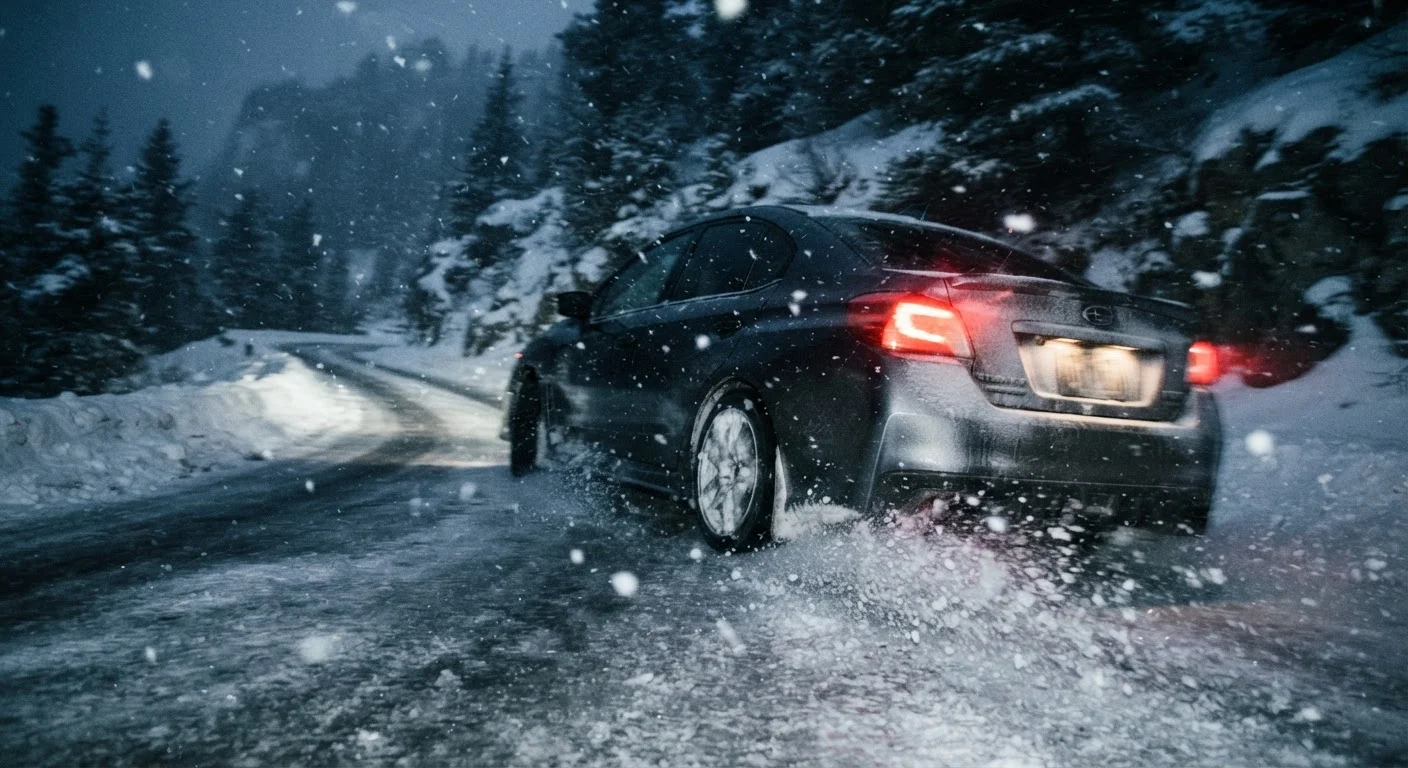
When a vehicle starts to slide, the body's natural reaction is to slam the brakes and jerk the wheel hard in the opposite direction of the skid. Both responses make things significantly worse. Hard braking on ice locks the wheels and eliminates steering control entirely. Overcorrecting the steering causes the car to swap ends or spin out completely.
Ice reduces tire-to-road friction to a fraction of what drivers experience on dry pavement. At that point, the physics of vehicle control work differently - and the corrections that work on dry roads are actively harmful on ice. The steps below are organized by drivetrain type because the mechanics of how power is distributed change what your hands and feet should do.
Before winter arrives, make sure your tires are in shape for the challenge. Tire pressure and tread depth directly affect grip on slippery surfaces, and worn tires dramatically increase the likelihood of a skid in the first place.
What you will need
Step-by-Step: Recovering from an Ice Skid
The steps below apply broadly, with drivetrain-specific notes called out where the approach differs. Act deliberately - panic inputs are the enemy of recovery.
Take Your Foot Off the Brake
The moment you feel the car begin to slide, release brake pressure completely. Locked wheels cannot steer. By releasing the brakes, you allow the tires to spin freely again and restore at least partial traction. If your car has ABS, the system will automatically pulse the brakes faster than any human can - your job is to press firmly and steadily without pumping, and to keep steering.
Look and Steer Where You Want to Go
Fix your eyes on the space you want the car to move toward - not at the obstacle you're trying to avoid. Your hands follow your eyes instinctively. For a rear-wheel drive (RWD) vehicle, if the rear is sliding right, steer gently to the right (into the skid) to realign the front and rear axles. For a front-wheel drive (FWD) vehicle experiencing understeer (the nose pushes wide), ease off the gas and steer smoothly toward your intended path - don't yank the wheel. AWD vehicles can experience either type of skid; apply the appropriate technique based on which end is sliding.
Ease Off the Accelerator - Gently
Lift off the gas pedal gradually. A sudden lift-off, especially in RWD vehicles, can cause weight to transfer abruptly to the front wheels and trigger a snap oversteer. In FWD vehicles, a light application of throttle can sometimes help pull the front wheels back in line - but only if the engine isn't already over-spinning the tires. AWD drivers should reduce throttle smoothly and let the system redistribute power.
Straighten the Wheel as the Car Responds
As the tires regain grip and the vehicle begins to realign, straighten the steering wheel progressively. If you hold a counter-steer correction a fraction too long, the car may overcorrect and swing to the opposite side - sometimes called a secondary skid. Feed the steering back to center in sync with the vehicle's recovery, not ahead of it.
Reapply Brakes Only After Traction Returns
Once the vehicle has straightened and you feel normal road resistance through the steering wheel, you can reapply the brakes - lightly and progressively. If you still need to slow down significantly, brake in short, gentle pulses (or rely on ABS to manage it for you). Aggressive braking the moment grip returns is a common cause of triggering a second skid.
Black Ice Gives No Warning
Black ice - a thin, nearly transparent layer of ice on the road surface - is visually indistinguishable from wet pavement. It forms most commonly on bridges, overpasses, shaded curves, and in the hours before dawn when temperatures hover near freezing. If road conditions are cold and damp, assume ice may be present even if you cannot see it, and reduce speed accordingly.
After the Skid: What Comes Next
Once you've stabilized the vehicle, resist the urge to immediately accelerate back to your previous speed. Pull over when it is safe to do so, take a breath, and assess whether any part of the vehicle made contact with a curb, guardrail, or other object. Even minor impacts at low speed can affect wheel alignment and handling. If your car pulls to one side after a winter incident, that's a sign something may need professional attention.
Longer term, a skid is useful feedback. It tells you the road is more dangerous than it looks and that your current speed or following distance needs adjustment. Icy patches are rarely isolated - if you skidded once, assume the same conditions exist for the next several miles. Reduce speed, increase following distance to at least 8-10 seconds, and avoid sudden lane changes. Good year-round tire habits - covered in our guide on tire pressure, tread, and rotation basics - are the most reliable form of skid prevention available to everyday drivers.