

Key Takeaways
Garden Mulch
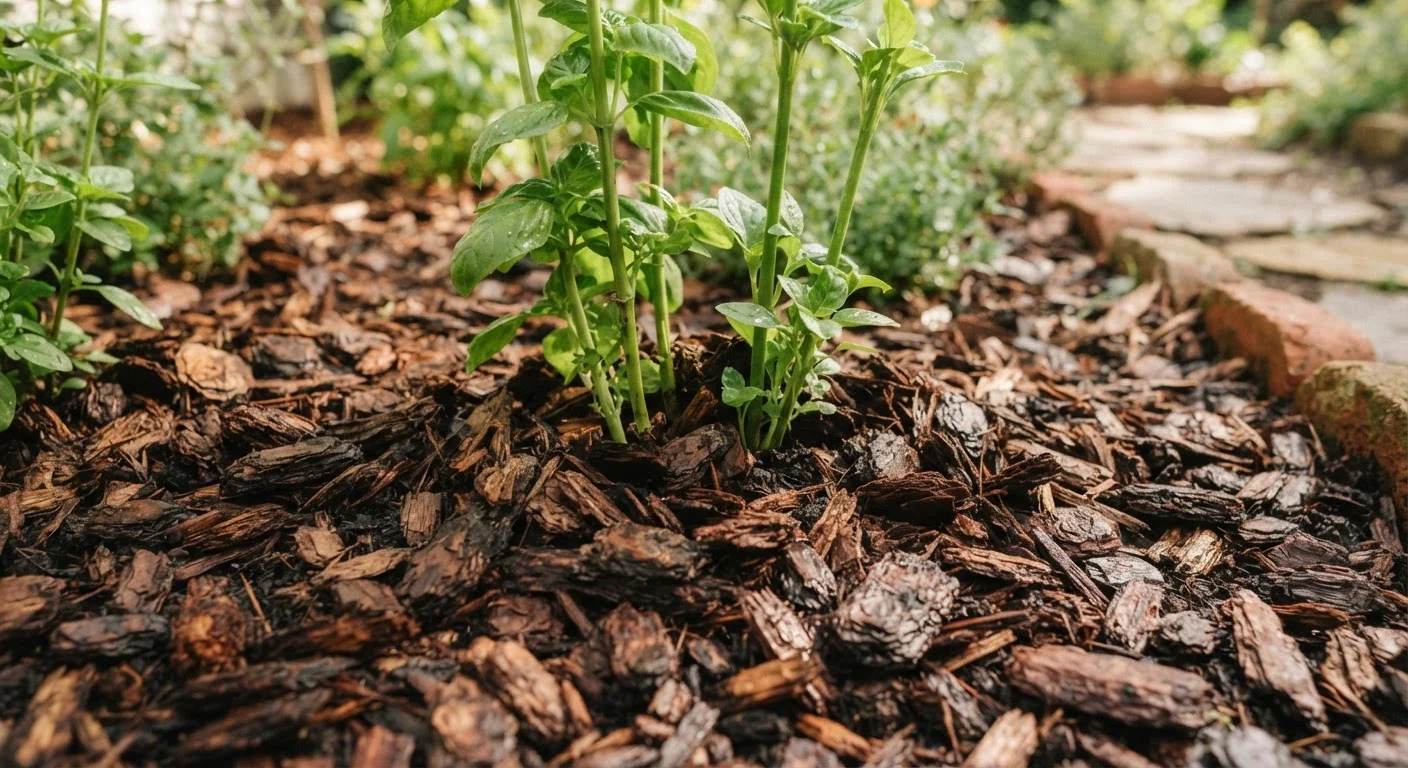
Garden mulch is any material - organic or inorganic - layered on top of soil to protect and improve it. It acts as a barrier between the soil surface and the open air, slowing moisture loss, blocking weed seeds from sunlight, and buffering soil temperature against heat and cold. Common organic types include wood chips, shredded bark, straw, and compost.
Organic mulches decompose over time, contributing organic matter to the soil and supporting microbial activity. Inorganic mulches, such as gravel or landscape fabric, do not break down and offer longer-lasting physical coverage without soil-building benefits.
What Mulch Actually Does Underground and Above
Most gardeners think of mulch as a finishing touch - something that makes beds look tidy. In practice, it's a working layer doing several jobs simultaneously. Understanding those jobs helps you apply mulch strategically rather than out of habit.
Moisture retention is the most immediate benefit. Bare soil loses water rapidly to evaporation, especially during warm, dry, or windy weather. A mulch layer physically shields the soil surface, slowing that evaporation and keeping moisture available to plant roots longer. This directly reduces how often you need to water - a meaningful benefit explored further in our article on watering habits that quietly harm plants.
Weed suppression works by blocking light. Most weed seeds require sunlight to germinate. A 2-4 inch mulch layer deprives them of that trigger, dramatically reducing the number that sprout. Note that mulch won't eliminate weeds that arrive as mature plants with established root systems - those need manual removal.
Soil temperature regulation is the underappreciated benefit. Mulch insulates. In summer, it keeps the root zone cooler during heat waves. In fall, it extends the growing season by slowing how quickly the ground loses heat. In winter, it buffers against freeze-thaw cycles that heave roots out of the soil.
Pull Mulch Back From Stems
Always leave a 2-3 inch gap between mulch and the base of plants, shrubs, and tree trunks. Piling mulch directly against stems traps moisture and creates ideal conditions for rot and fungal disease. The goal is to cover the soil, not the plant.
Organic vs. Inorganic Mulch: Choosing the Right Type
Organic mulches - shredded bark, wood chips, straw, shredded leaves, and compost - decompose over time. That decomposition is a feature, not a flaw. As microbes break down organic material, they release nutrients and build the kind of soil structure that plants thrive in. This is why pairing mulch with good soil health practices amplifies results in both directions.
Inorganic options - gravel, crushed stone, and landscape fabric - don't break down and require less frequent replacement. They're practical in pathways, around drought-tolerant plants, or in areas where you're not trying to improve soil biology. Their limitation is exactly what makes organic mulches valuable: they add nothing back to the soil.
For most vegetable gardens and mixed flower beds, organic mulch is the practical default. For permanent shrub borders where you want minimal maintenance over years, a coarser wood chip or bark mulch holds up longer before needing a top-off.
Up to 70%
Reduction in soil moisture evaporation
Research from cooperative extension programs at several land-grant universities has found that mulched soil can retain significantly more moisture than bare soil under comparable conditions.
2-4 inches
Optimal mulch depth for most beds
This range is consistently recommended by university extension horticultural guidelines as the threshold that balances weed suppression, airflow, and moisture retention.
50-90%
Reduction in annual weed germination
Studies on light-blocking mulch layers show that maintaining adequate depth suppresses the majority of annual weed seed germination by denying seeds the light they need to sprout.
How to Apply Mulch Without Common Mistakes
The most widespread mulching error is piling material against plant stems and tree trunks - sometimes called a mulch volcano. This traps moisture against bark, inviting rot and creating entry points for disease and pests. Leave a gap of at least 2-3 inches around the base of any plant.
Depth matters as much as placement. Aim for 2-4 inches across the bed. Shallower than 2 inches and weed seeds still find enough light to sprout. Deeper than 4 inches and you risk creating an anaerobic (oxygen-deprived) layer that harms roots and encourages fungal problems.
Apply mulch after the soil has warmed in spring - not before. Mulching over cold soil in early spring slows warming and delays planting. Conversely, a fall application after the growing season helps protect root systems through winter and gives organic mulch time to begin breaking down before spring.
Mulching benefits apply equally whether you're gardening directly in the ground or using a raised setup. Our comparison of raised beds versus in-ground planting covers how each format handles moisture and soil management differently.
Building a Mulching Routine Into Your Garden Year
A mulching routine doesn't need to be complicated. Checking and refreshing your mulch layer twice a year - once in late spring, once in early fall - covers most scenarios for the average US home garden. Organic mulch composts in place, so the layer thins gradually; top it off rather than stripping and replacing it each season.
Free and low-cost sources are worth knowing. Municipal leaf drop-off programs often distribute free wood chip mulch. Shredded leaves from your own yard, composted kitchen scraps, and straw from garden centers are all workable options. If you're already composting at home, finished compost applied as a thin 1-inch layer beneath a coarser mulch combines nutrient delivery with surface protection.
Track your results over a season or two. Gardeners who mulch consistently typically report fewer weeding sessions, more resilient plants during dry spells, and progressively better soil structure as organic matter accumulates. It's one of the highest-return habits available - and among the most forgiving if you don't do it perfectly the first time.