

Key Takeaways
Start here
Why "I Don't Know My Style" Is the Perfect Starting Point
Next
How to Discover Your Personal Aesthetic
Build on it
The Foundation Principles Every Beginner Needs
Take action
Where to Start (Without Overwhelming Yourself)
Avoid pitfalls
Common First-Timer Mistakes to Sidestep
Why "I Don't Know My Style" Is the Perfect Starting Point
Most first-time decorators arrive at their blank space convinced that not having a defined style is a problem to solve before they can begin. It isn't. In fact, starting without fixed ideas means you're free to observe what genuinely resonates rather than performing someone else's aesthetic.
Interior design is not a credential. It's a set of learnable principles applied through personal judgment. The gap between a room that feels right and one that feels off is almost never about money or professional training - it's about intention. When you act with intention, even modest choices read as deliberate.
Think of this guide as your grounding document: a place to understand the why behind design decisions before you make a single purchase. The pre-project clarity checklist is a useful companion once you're ready to move from exploration to action.
How to Discover Your Personal Aesthetic
Your aesthetic already exists - you just haven't named it yet. The most reliable way to surface it is through image collection rather than introspection. Save or clip images of spaces, objects, outdoor environments, clothing, and food presentations that make you feel something positive. Do this for two or three weeks without editing yourself.
Then review your collection and look for patterns. Do you keep gravitating toward warm, earthy tones or toward crisp, cool neutrals? Are the spaces airy and spare, or layered and full? Is there a recurring material - raw wood, aged linen, polished concrete? These recurring signals are your aesthetic fingerprint.
Anchor piece
The dominant, defining item in a room - such as a sofa or large rug - around which all other design decisions are made.
Scale
The size of a piece of furniture or décor relative to the room and the other objects around it. Poor scale is one of the most common reasons a room feels "off."
Color flow
The way colors relate and move from one room to another in a home, creating a sense of visual continuity without requiring exact matches.
Layering
Building a room's visual richness through multiple elements - large furniture, smaller furniture, textiles, lighting, and objects - rather than relying on one or two pieces alone.
Aesthetic fingerprint
The personal, consistent pattern of colors, materials, and moods a person is repeatedly drawn to, which forms the basis of their individual style.
Cohesion
The quality of a home where rooms feel connected and intentional as a whole, rather than each room feeling like a separate, unrelated space.
Named style categories (Scandinavian, mid-century modern, maximalist, cottagecore) are useful shorthand but poor goals. Most people are drawn to a blend, and rooms that rigidly follow one named style often feel like showrooms. Use style labels as vocabulary, not blueprints. As this piece on home cohesion explains, what matters most is a consistent thread running through the whole home - not matching suites.
The Foundation Principles Every Beginner Needs
Three principles govern whether a room feels resolved or restless, regardless of style:
- Scale and proportion: Furniture must suit the room's dimensions. Undersized pieces in a large room feel tentative; oversized pieces in a small room feel oppressive. Before purchasing, measure your space carefully and sketch a rough floor plan with dimensions noted.
- Color flow: Color doesn't need to match room to room, but it should relate. Picking up a tone from one room in an adjacent space - even subtly - creates a sense of coherence. Natural light transforms color throughout the day, so evaluate paint swatches at different times before committing.
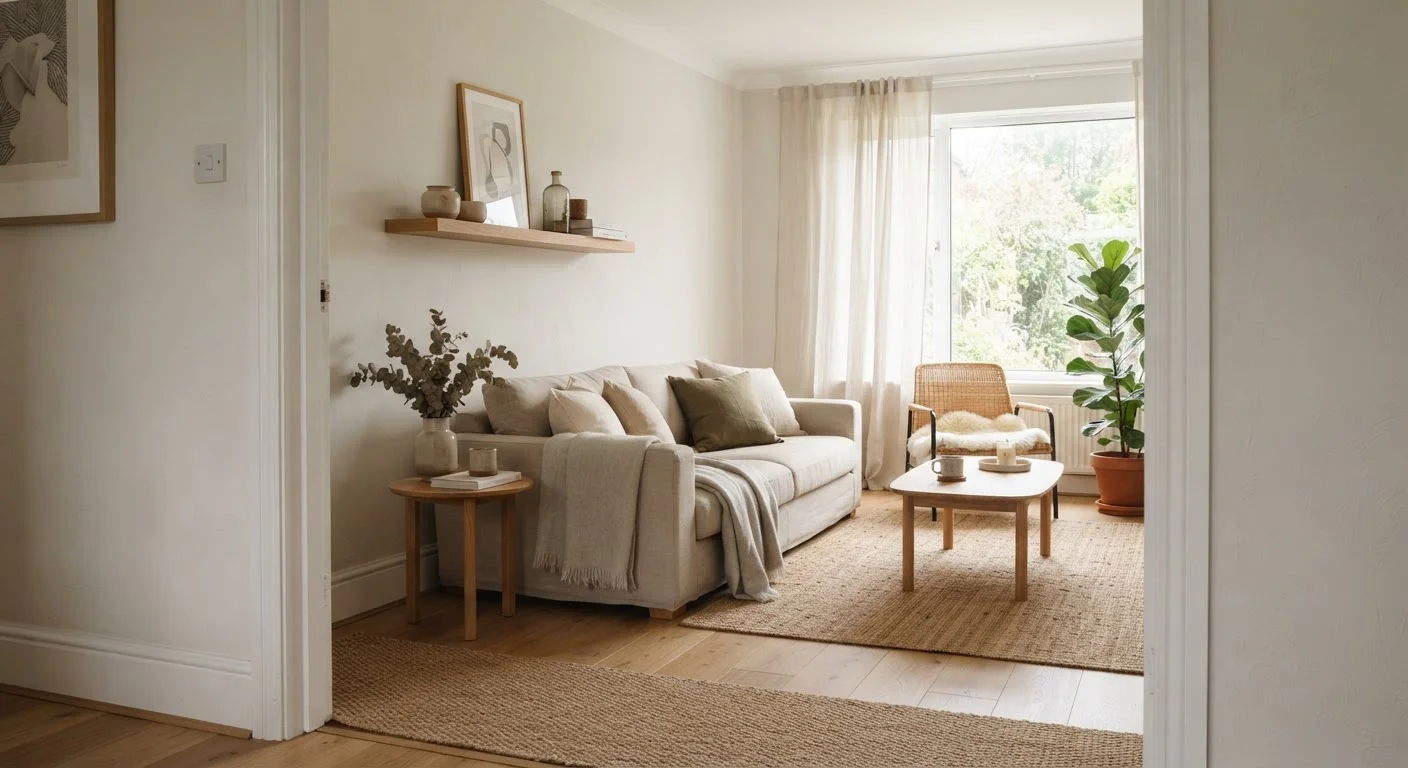
- Layering: Rooms that feel complete have multiple visual layers - architecture, large furniture, smaller furniture, textiles, lighting, and objects. Beginners often stop at furniture and wonder why the room feels unfinished. Textiles (rugs, cushions, curtains) and considered lighting do as much work as any sofa.
Metal finishes are one area where beginners often over-restrict themselves. Mixing metals thoughtfully is widely accepted in contemporary design - learn why mixing metals isn't a design rule-break.
Where to Start (Without Overwhelming Yourself)
Pick one room - the one you spend the most time in. Within that room, identify one anchor piece: a sofa, a bed, or a large rug. This single item should genuinely reflect your emerging aesthetic, because every other decision in that room will respond to it. Spend more time (and, if budget allows, more money) getting that anchor right.
Set a realistic budget before you shop, not after. Knowing your parameters removes the paralysis of infinite options. If you've never built a household budget before, the step-by-step budgeting guide offers a clear framework. The saving and debt hub is also useful if you're balancing decoration costs with other financial priorities.
Once your anchor room feels cohesive, move to the next space - bringing a color or material from the first room with you as a connective thread. This sequential approach prevents the disjointed, room-by-room decorating trap that makes many homes feel like a series of unrelated sets.
Common First-Timer Mistakes to Sidestep
Live in a room before you finish it
If possible, spend at least two to four weeks in a new space before making significant purchases. You'll quickly learn how light moves through the room, which traffic paths feel awkward, and what you actually need - versus what looked appealing in a showroom. This waiting period often saves money and prevents regret.
Beyond the foundational pitfalls already mentioned, watch for these:
- Buying in a single shopping trip: A room decorated in one afternoon often looks it. Give yourself time between major purchases to live with what you have and see what's actually missing.
- Ignoring the ceiling: Ceilings are the room's fifth wall. A light fixture, a coat of paint, or even a hanging textile can dramatically elevate a space that otherwise feels flat.
- Dismissing DIY entirely: Many finishing touches - painting walls, hanging shelves, reupholstering a seat cushion - are genuinely within a beginner's reach. The first-time DIY guide helps you understand which tasks are safe to tackle yourself and when to call a professional.
- Over-accessorizing too soon: Objects and accessories are easy to add but hard to subtract. Start sparse and add intentionally rather than filling every surface and editing later.
The broader Home Improvement hub is a reliable resource as your projects grow in ambition.