

Key Takeaways
The Gap Between Morocco's Instagram Image and the Ground Truth
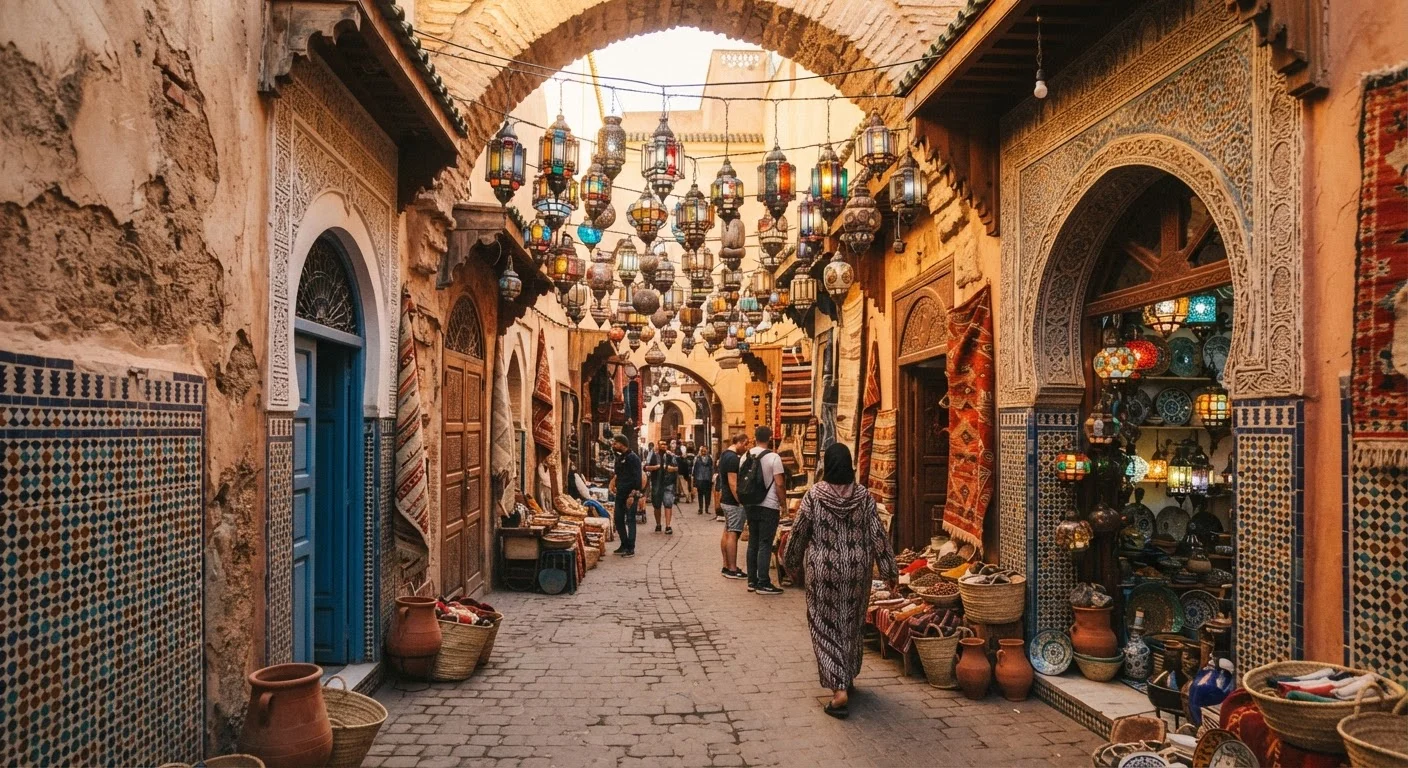
Morocco consistently tops travel wish lists - and for good reason. The country offers a genuinely dazzling mix of ancient architecture, dramatic landscapes, and rich culinary traditions. But the images circulating on social media tend to flatten a nuanced destination into a handful of blue-washed alleys and rose-gold desert sunsets, leaving first-time visitors under-prepared for what they'll actually encounter.
The gap between expectation and reality isn't a reason to skip Morocco - it's a reason to research it properly. Whether you're building an accurate pre-trip picture or already mid-plan, understanding the realities of crowds, costs, and culture will shape a far better experience than any highlight reel can.
Myth
Morocco is an ultra-budget destination where everything costs next to nothing.
Fact
Costs vary enormously by location and choice; popular cities like Marrakech can surprise travelers with mid-range to high prices for food, accommodation, and experiences.
The perception that Morocco is uniformly inexpensive comes partly from older travel accounts and partly from comparing currency exchange rates in isolation. In reality, a riad in Marrakech's medina with reliable hot water and secure Wi-Fi routinely costs as much as a mid-range European city hotel. Guided day trips to Ouzoud Falls or Aït Benhaddou add up quickly, and tourist-facing restaurants in the main squares price their menus accordingly. Genuine budget travel is possible - local street food, shared taxis, and guesthouses in less-visited towns like Meknès or Taroudant keep costs down - but it requires deliberate choices rather than a general assumption that Morocco is cheap.
Myth
Bargaining aggressively in the souks is expected and appreciated by sellers.
Fact
Negotiation is a normal part of souk commerce, but it follows an etiquette; aggressive or disrespectful haggling is considered rude, not savvy.
Bargaining in Moroccan markets is real, but the cultural script around it involves patience, a degree of reciprocal hospitality (tea offered, conversation exchanged), and a genuine willingness to walk away - not theatrical confrontation. Opening with an insultingly low offer or treating negotiation as a sport to win tends to create friction rather than connection. A widely shared approach is to counter at roughly half the asking price and negotiate toward a middle ground. Critically, starting a negotiation you have no intention of completing - browsing without any interest in buying - is considered poor form in souk culture.
Myth
Marrakech's medina is manageable any time of day - just go explore.
Fact
The medina's narrow lanes become genuinely overwhelming during peak hours and high season; timing your exploration significantly changes the experience.
Marrakech's medina is a UNESCO World Heritage Site and one of the most-visited urban areas in Africa. From late morning through early evening in spring and summer, the main tourist corridors - particularly around the tanneries, Bahia Palace, and the Djemaa el-Fna - are extremely congested. Motorbikes use pedestrian lanes. Unofficial guides approach repeatedly. For first-time visitors, this can tip from exciting to disorienting quickly. Early mornings (before 9 a.m.) and the post-Asr-prayer evening hours tend to be calmer and more navigable. Having an offline map app downloaded before arrival is genuinely useful, not optional.
Myth
Solo female travelers should avoid Morocco - it's not safe for women traveling alone.
Fact
Many women travel solo in Morocco without incident, but harassment in busy urban areas is a documented reality that warrants specific preparation rather than avoidance.
Blanket statements in either direction - "Morocco is perfectly safe" or "women shouldn't go" - fail solo female travelers. The more accurate picture, widely reported by those with experience traveling there, is that verbal harassment in crowded city areas is common enough to plan around, not ignore. Dressing in ways that align with local norms (loose clothing, covered shoulders and knees in medinas and rural areas), walking with confidence, and learning a few phrases in Darija (Moroccan Arabic) or French all reduce unwanted attention meaningfully. Coastal cities like Essaouira and Asilah are frequently cited as having a noticeably more relaxed atmosphere. Consulting up-to-date traveler accounts and official government travel advisories before departure is always advisable.
Travel safety conditions can change; always verify current advisories through your government's official travel information service before departing.
Myth
Morocco is basically all desert - the whole country looks like the Sahara.
Fact
Morocco has remarkable geographic diversity, including Atlantic and Mediterranean coastlines, snow-capped Atlas peaks, fertile river valleys, and forested hill towns.
The Sahara-adjacent Erg Chebbi dunes near Merzouga are genuinely spectacular, but they represent one corner of a geographically varied country. The Rif Mountains in the north are lush and temperate. The Atlantic coast from Agadir to Essaouira is wind-swept and surf-friendly. The Drâa Valley south of Ouarzazate is characterized by palm oases and ancient kasbahs. The High Atlas can hold snow into spring. Travelers who assume Morocco is one continuous desert often miss the landscapes - and the quieter, less-touristed towns - that give the country much of its depth.
Planning Around What Morocco Actually Is
Once you've cleared the misconceptions, Morocco rewards deliberate planning. Crowd management alone can transform a trip: Marrakech's Djemaa el-Fna square is chaotic by mid-morning but atmospheric at dusk. The blue city of Chefchaouen, while undeniably photogenic, sees heavy foot traffic in summer; spring and autumn visits feel noticeably calmer. Off-peak timing in Morocco doesn't just mean fewer selfie-sticks - it means cooler temperatures in the Sahara-adjacent south and more genuine interaction in the souks.
How you structure the trip matters too. Morocco's geography - from the Atlas Mountains to the Atlantic coast to the Sahara - rewards slow travel over rapid city-hopping. A week split between Fès and the Drâa Valley will feel richer than four cities in five days. And for travelers uncertain whether to navigate medinas independently, weighing solo versus guided formats is worth doing before you book.
Watch Out for Unofficial 'Guide' Pressure
In Marrakech and Fès in particular, travelers frequently report being approached by individuals who offer to guide them through the medina, then demand payment afterward. This can escalate into uncomfortable situations. Morocco has a licensed official guide system - hiring through your accommodation or through the official local tourism office removes this ambiguity. Politely declining with a firm 'la shukran' (no thank you) and continuing to walk is generally effective.
Finally, getting to Morocco affordably is its own puzzle. Understanding what actually drives airfare - rather than relying on popular but unverified booking theories - matters here. Our breakdown of flight booking myths is a useful starting point for the transatlantic or European-connection leg. For the broader logistics of putting a Moroccan trip together, the Trip Planning hub has frameworks that apply well to complex, multi-stop itineraries like this one.