

Key Takeaways
Why Pollinators Need Your Help - and What You Can Realistically Offer
Bees, butterflies, moths, and hoverflies do the quiet work of pollinating roughly one-third of the food we eat, yet many of their natural habitats have been replaced by turf grass, paved surfaces, and monoculture landscapes. The good news: you don't need a habitat restoration budget or a landscape architect to make a meaningful difference.
Small, intentional plant choices layered into an existing yard can provide food, shelter, and nesting opportunities that local pollinators increasingly lack. The goal isn't a perfect wildflower meadow - it's a yard that does a little more ecological work than it did before.
Before picking plants, it helps to understand what pollinators actually need: a reliable sequence of blooms from early spring through late fall, access to water, undisturbed nesting sites, and freedom from pesticide exposure. Addressing even two or three of these needs makes your yard measurably more hospitable.
For a deeper look at how plant origins affect ecological value, see our guide on native plants vs. ornamental exotics.
What You'll Need Before You Start
Gather the essentials before making any changes to your yard. Having the right tools on hand keeps the work efficient and reduces the chance of disturbing existing plants unnecessarily.
What you will need
Once you have your tools and a rough sense of your site conditions - sun exposure, soil type, and existing plants - you're ready to plan your additions.
Step-by-Step: Adding Pollinator Support to an Existing Yard
Map Your Existing Yard for Gaps and Opportunities
Walk your yard and note where bare soil, turf edges, fence lines, or underused corners exist. These are your lowest-disruption planting opportunities. Also note bloom times for anything already growing - you're looking for seasonal gaps where nothing flowers.
Choose Native Plants That Bloom in Sequence
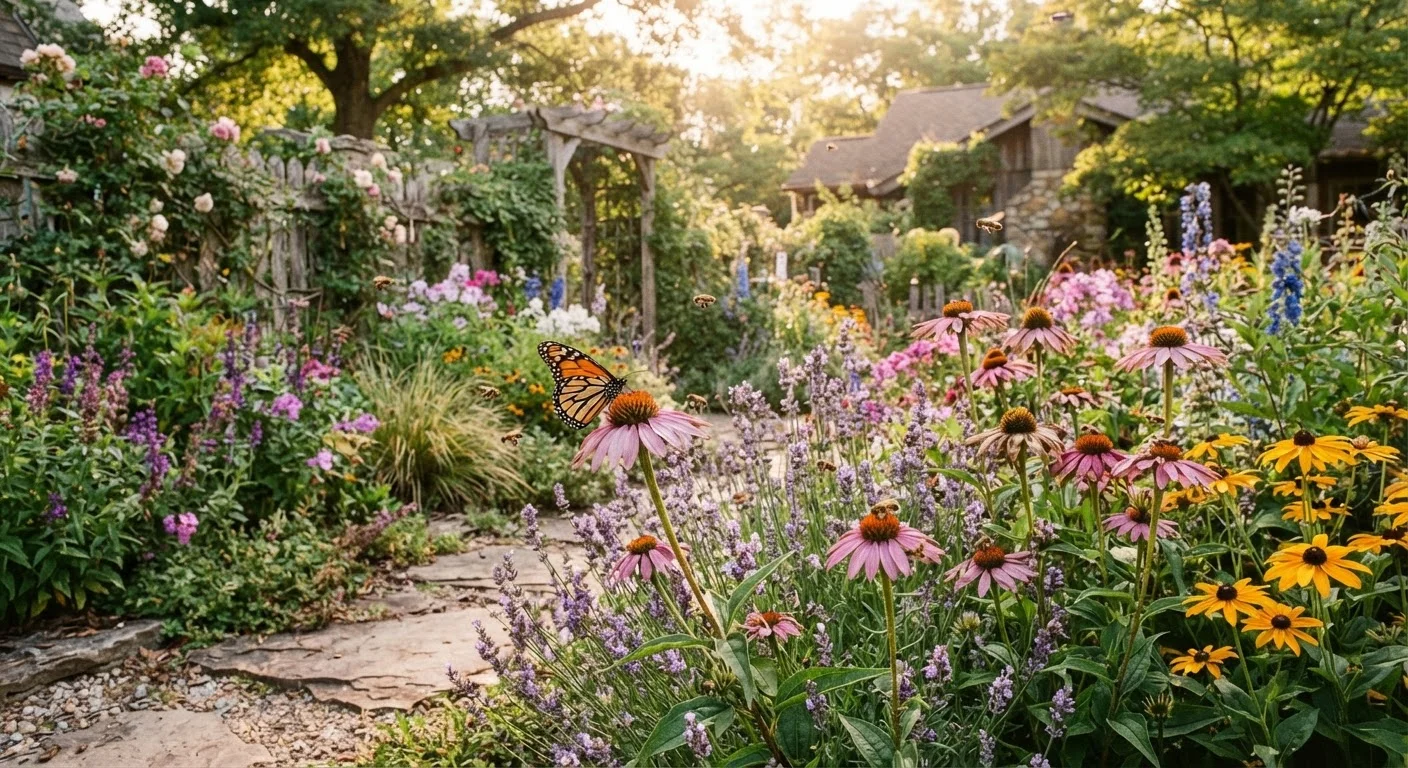
Select three to five native plants that collectively cover spring, summer, and fall bloom periods. For much of the US, reliable choices include wild columbine (Aquilegia canadensis) for spring, purple coneflower (Echinacea purpurea) for summer, and aromatic aster (Symphyotrichum oblongifolium) for fall. Adapt selections to your region's native plant palette.
Native plants are generally better adapted to local conditions, require less supplemental watering once established, and tend to support a broader range of native bee species than ornamental exotics.
Plant in Clusters, Not Scattered Singles
Pollinators navigate by color and scent and are more likely to find and return to a planting if the same species is grouped together. Aim for clusters of three to five plants of the same species rather than one of everything. Even a 3-foot cluster of a single native plant is more effective than a dozen different species planted individually.
Add a Simple Water Source
A shallow dish, birdbath with a stone landing pad, or small container of water placed near plantings gives pollinators a reliable water source - especially important during dry spells. Change the water every two to three days to prevent mosquito breeding.
Reduce or Eliminate Pesticide Use in Planted Areas
Even pesticides marketed as organic or natural can harm bees and other beneficial insects. Before applying any pesticide in or near your pollinator plantings, identify the pest accurately and consider whether the damage level truly warrants treatment. Hand-picking, physical barriers, or simply tolerating minor damage are often better options in a habitat garden.
Leave Some Areas Intentionally Undisturbed
Roughly 70% of native bee species nest in the ground. A small patch of bare, undisturbed, well-drained soil - even 1 to 2 square feet - can provide nesting habitat. Similarly, hollow or pithy plant stems left standing through winter shelter cavity-nesting bees. Designate at least one corner of your yard where minimal maintenance is the rule.
If you're working with containers or raised beds rather than open ground, the same principles apply. Our article on container gardening varieties and soil mixes covers how to set up productive growing environments that translate well to pollinator plantings. Raised beds can also work beautifully - compare your options in our guide to raised beds vs. in-ground planting.
Think Regionally When Choosing Plants
Pollinator needs vary significantly by region. A plant that's a native powerhouse in the Southeast may be a non-native ornamental in the Pacific Northwest. Consulting your state's native plant society or university extension service ensures your selections actually support the local bee and butterfly species in your area, not just generic pollinators in general.
Common Pitfalls and How to Avoid Them
Even well-intentioned pollinator gardens can fall short. One of the most common mistakes is planting only summer bloomers, leaving nothing for early spring bees emerging from dormancy or late-season butterflies fueling up for migration. Aim for at least one plant in bloom during each season.
Another pitfall is over-tidying. Hollow stems left standing through winter shelter native bee larvae. Leaf litter provides overwintering habitat for moths and beetles. Resist the urge to cut everything back in fall - wait until temperatures have been consistently above 50°F for several days in spring before doing a full cleanup.
Finally, watch out for plants labeled "pollinator-friendly" at garden centers that turn out to be sterile cultivars. Heavily doubled flowers - roses bred to have many petals, for example - often produce little to no accessible pollen or nectar. When possible, choose straight species or single-flowered cultivars. If shade limits your options, our guide to shade gardening in low-light spots can help you identify plants that both tolerate shade and still attract pollinators.
Check for Invasive Species Before Planting
Some plants commonly sold as pollinator-friendly - such as butterfly bush (Buddleja davidii) - are considered invasive in several US states and can outcompete native plants that provide more complete habitat. Always verify that a plant is not on your state's invasive species list before introducing it to your yard. Your state's department of agriculture or a regional extension office is a reliable resource.