

Key Takeaways
Lighting Layers
Lighting layers refers to the practice of using multiple light sources - each serving a different purpose - within a single room. Rather than relying on one overhead fixture to do all the work, layered lighting combines ambient light (general illumination), task light (focused, functional light), and accent light (decorative highlights) to create a flexible, visually rich space. The result is a room that can shift in mood and function at different times of day.
Lighting designers often reference the three-layer model - ambient, task, and accent - as the standard framework for residential lighting plans. Dimmer switches that allow independent control of each layer are considered best practice for maximizing flexibility.
The Problem With a Single Fixture
Walk into most rooms and look up. Chances are there's a single overhead light - a ceiling fan with a built-in kit, a flush-mount dome, or a basic pendant - doing all the heavy lifting. It illuminates the room, yes. But it also flattens it.
Overhead fixtures cast light downward from a single point, which means furniture, faces, and architectural details all receive the same undifferentiated wash of brightness. Shadows pool in corners. The room looks functional but rarely feels inviting. Worse, that one switch gives you no ability to shift the mood - a dinner party and a Saturday morning chore session look identical.
This is the core problem that layered lighting solves. Just as color, pattern, and texture each add a distinct visual dimension, each lighting type contributes something the others cannot replicate.
The Three Layers Explained
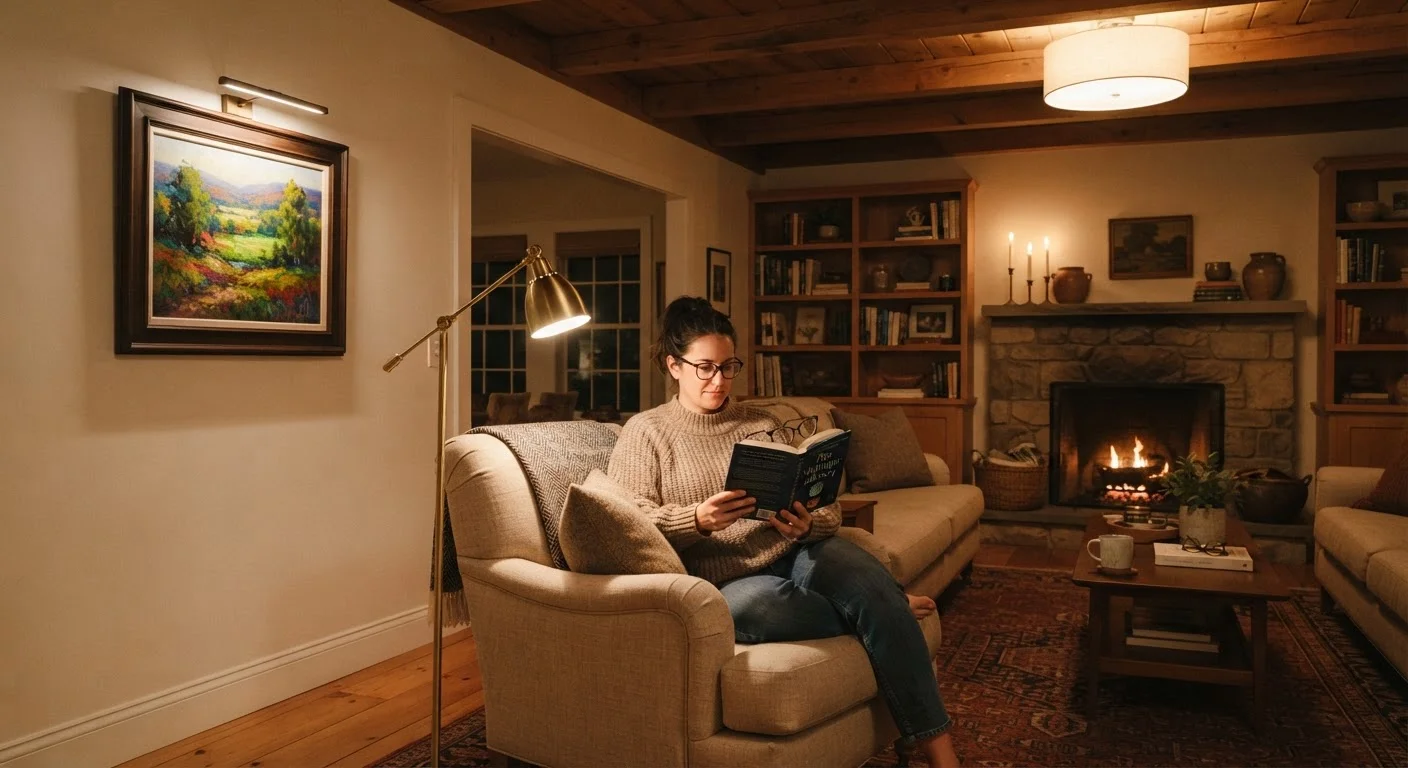
Ambient lighting is the foundation - the room's general illumination. It can come from ceiling fixtures, recessed downlights, or even large torchiere floor lamps that bounce light off the ceiling. Its job is to make the space navigable and comfortable without glare. Think of it as the canvas.
Task lighting is focused and functional. A reading lamp beside an armchair, pendant lights over a kitchen island, or under-cabinet lights above a prep area all qualify. Task lighting exists to reduce eye strain during specific activities by delivering concentrated light exactly where it's needed - not scattered across the whole room.
Accent lighting is intentional and expressive. Wall sconces, picture lights, LED strip lights tucked behind shelves, or small directional spotlights pointed at a piece of art all serve to highlight and add visual depth. Accent light draws the eye toward things worth seeing, and it's often what separates a designed room from a merely furnished one. If you're working on identifying what deserves to be highlighted, finding and framing your room's focal point is a natural starting place.
Start With One Lamp, Not a Full Overhaul
You don't need to redesign your lighting scheme all at once. Pick the room where you spend the most time and add a single well-placed floor or table lamp to create a task or accent layer. Notice how the room feels different, then build from there. Small, deliberate additions are easier to evaluate than wholesale changes.
How to Build Layers in Any Room
Start by auditing what you already have. Most rooms have ambient light covered - even if imperfectly. The gaps are almost always at the task and accent layers. Ask yourself: Where do I actually do things in this room? Where does my eye want to land but find nothing interesting?
For task lighting, position fixtures close to the activity. A floor lamp works only if it's placed beside the chair you actually read in, not in a corner across the room. In kitchens, under-cabinet lighting is one of the most practical upgrades available and requires minimal installation.
For accent lighting, plug-in picture lights and battery-powered puck lights eliminate the need for rewiring. Place them to graze a textured wall, frame a bookshelf vignette, or illuminate an object that deserves attention.
Finally, add dimmers wherever possible. Dimmer switches - even retrofit smart-bulb versions - allow you to dial each layer up or down independently, giving you a genuinely different room at 8 a.m. versus 8 p.m. Note that some dimmer installations involve electrical work; when in doubt, consult a licensed electrician to ensure safe, code-compliant installation.
It's also worth remembering that how light behaves in your room is shaped by your walls. Warm and cool wall tones respond very differently to artificial light, so consider your paint color when choosing bulb temperatures - a warm white bulb (around 2700K) tends to flatter warm neutrals, while cooler bulbs suit cooler palettes.
Small Rooms and Tight Budgets
Layered lighting is not a large-room luxury. In a small bedroom, a single table lamp and a clip-on reading light can add two meaningful layers with no electrical work. In a bathroom, a lighted mirror supplements harsh overhead fixtures with flattering front-facing light - a practical upgrade with an outsized effect.
Textiles and soft furnishings also influence how light feels in a space: sheer curtains diffuse incoming natural light beautifully during the day, while heavier drapes can make evening artificial light feel more contained and warm. Layering your lighting and your textiles together creates a room that feels considered from every angle.
The investment needed to start layering is genuinely modest. One well-placed floor lamp and a picture light on a meaningful piece of art can shift the entire character of a room - without touching the ceiling fixture at all.