

Key Takeaways
Structural Role of Textiles
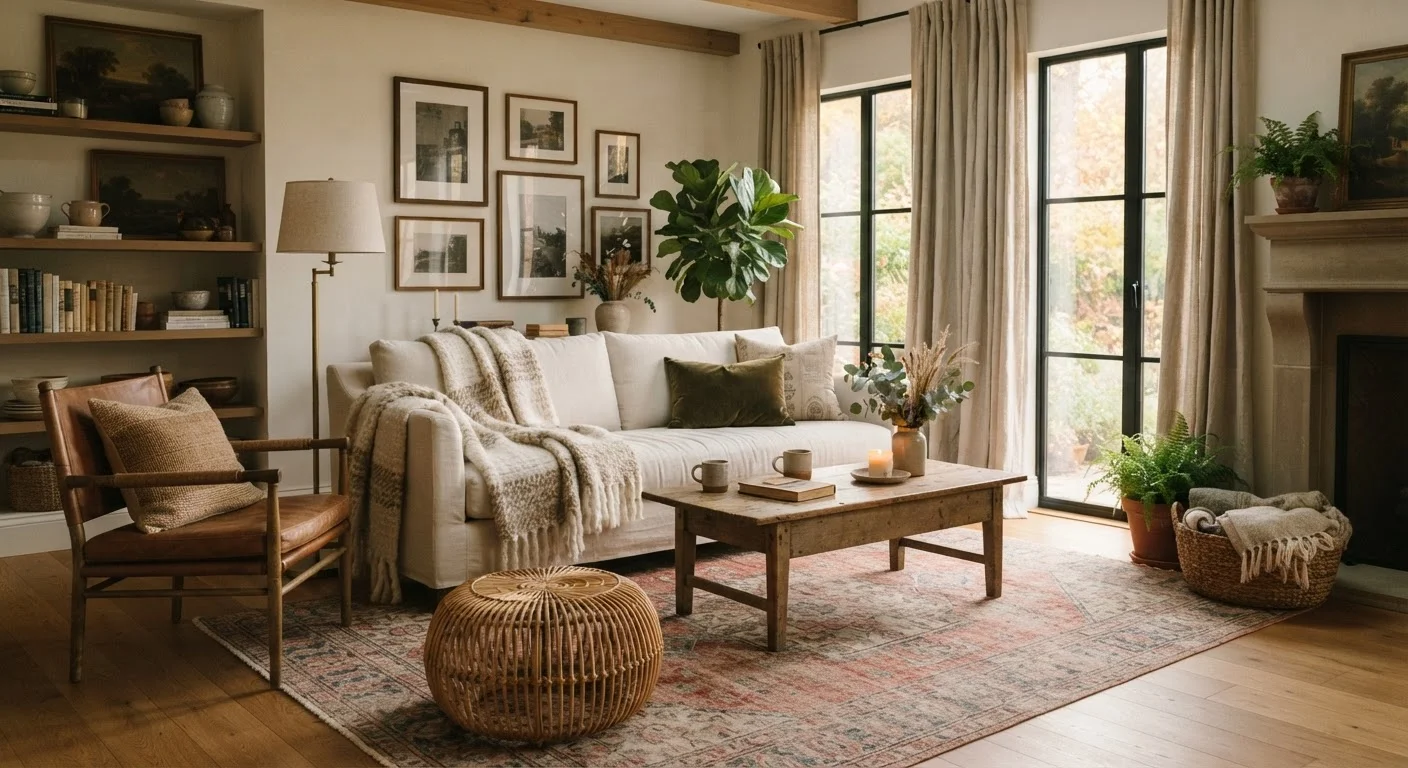
In interior design, textiles serve a structural role when they actively shape how a room is organized and experienced - not just how it looks. A rug can define a conversation zone. Curtains can make a ceiling feel taller. Upholstery can visually anchor a furniture grouping. These effects go beyond decoration; they influence how space is perceived and used.
Designers often refer to this as the 'soft architecture' of a room - textiles functioning like walls, dividers, or acoustic panels without any permanent construction.
Why Textiles Are More Than Decoration
Most decorating advice focuses on how textiles look - the color of a throw pillow, the pattern on a rug. But the more useful question is what textiles do. Fabric-based elements are among the most powerful spatial tools available to a homeowner, and understanding their functional role changes how you shop for and place them.
Think of textiles as the flexible, reversible layer of your room's architecture. Unlike paint or furniture, they can be swapped seasonally, layered gradually, and moved without leaving a mark. Yet their structural effects - on scale, acoustics, zone definition, and visual weight - are just as significant as any permanent fixture. For more on how small changes compound into big spatial shifts, see how targeted upgrades change how a room reads.
Rugs: Zone Definers and Visual Anchors
An area rug does something no piece of furniture can do on its own: it creates a visual boundary on the floor plane. In a living room, a rug placed under a seating group signals that those chairs and that sofa belong together - they're part of one conversation zone. Without it, the same furniture can feel scattered, even if nothing has moved.
Size matters enormously here. A rug that's too small floats beneath the coffee table while furniture hovers around it, reinforcing disconnection rather than unity. The general principle: enough rug for at least the front legs of every major seat to rest on it. In open-plan layouts, using separate rugs to delineate a dining area from a lounge area is one of the most effective ways to create structure without building walls. This approach is especially valuable in compact homes - see decorating strategies for compact rooms for more on how to make limited square footage work harder.
The Front-Leg Rule for Rug Sizing
If you're unsure whether a rug is large enough, test the front-leg rule: every major seat in the grouping should have at least its front two legs on the rug. This creates visual unity without requiring a rug large enough to cover the entire furniture footprint. It's one of the simplest ways to correct a room that feels spatially unresolved.
Curtains: Height, Light, and Proportion
Curtains are one of the most underestimated tools for manipulating perceived room proportions. Hung just above the window frame, they frame glass and stop there. Hung near the ceiling with floor-length panels, they transform the entire wall into a vertical statement - making the ceiling feel higher and the room feel more composed.
Beyond scale, curtains manage the quality of light entering a space, which in turn affects how every other surface reads. Sheer panels soften harsh midday sun while maintaining openness. Lined drapes block morning glare and add acoustic mass. This relationship between light and surface is worth considering alongside your wall color - warm and cool neutrals behave very differently under natural and artificial light, and curtain weight affects which you see at any given hour.
Upholstery and Layering: Weight, Texture, and Sound
Upholstery does double duty: it defines the visual weight of a furniture piece and contributes meaningfully to a room's acoustic character. A heavily upholstered sofa in a velvet or boucle fabric reads as grounded and substantial - it anchors a grouping. The same frame in a lightweight linen reads as airier but less settled. Neither is wrong, but understanding that choice helps you make it deliberately.
Layering throws, cushions, and upholstered ottomans adds acoustic absorption - soft surfaces interrupt sound waves that would otherwise bounce between hard floors, walls, and ceilings. In rooms with wood floors and minimal wall treatments, even a few well-placed textiles can noticeably reduce echo. This connects to a broader principle: textiles and layered lighting work in parallel to shape how a room feels at different times of day. When considering how textiles interact with color and pattern across multiple pieces, embracing color, pattern, and texture together provides a useful framework for avoiding visual flatness without overcrowding a space.
Textiles and Cohesion Across Rooms
One of the most effective ways to make a home feel intentional - rather than room-by-room assembled - is to carry a textile element through multiple spaces. A consistent rug fiber, a repeated pillow color, or the same curtain fabric in adjacent rooms creates visual continuity. For a broader look at why whole-home cohesion matters, see why decorating room-by-room often backfires.